
When people think about addiction, they often think first about the brain. That makes sense: addiction changes brain circuits involved in motivation, reward, decision-making, and relapse. But a growing area of research is showing that the story may not start or end in the brain alone.
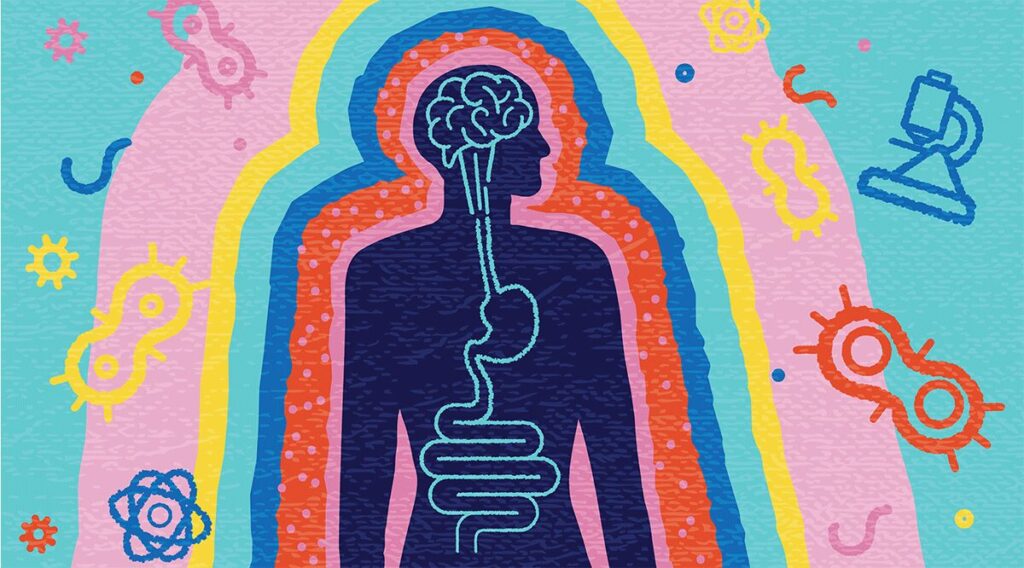
A new Rutgers study led by Dr. Santiago Cuesta, published in Gut Microbes, explores how bacteria in the gut may influence cocaine-related behaviors in mice. The study focuses on the gut-brain axis, the communication network between the digestive system and the brain, and how changes in gut bacteria may affect brain plasticity and motivation.
The research builds on earlier work showing that cocaine exposure can alter the gut microbiome, the community of bacteria and other microorganisms that live in the digestive tract. In particular, cocaine exposure was linked to an increase in a group of bacteria called Proteobacteria. These bacteria can use glycine, a small molecule that plays important roles throughout the body and brain.
Glycine may not be a household name, but it helps support communication between brain cells. In the brain, it can influence systems involved in learning, memory, motivation, and reward. Because these systems are also central to addiction, Dr. Cuesta’s team wanted to understand whether gut bacteria that reduce glycine levels could affect cocaine-seeking behavior.
To study this question, the researchers used a mouse model of cocaine self-administration. This type of model allows mice to voluntarily press a lever to receive cocaine, making it one of the more useful tools for studying motivation, drug-taking behavior, and relapse-like responses in addiction research.
The team compared mice colonized with two types of E. coli bacteria. One strain could use glycine, while the other was genetically modified so that it could not take up glycine in the same way. This allowed the researchers to ask a very specific question: does the ability of gut bacteria to consume glycine change how mice respond to cocaine?
The answer was yes.
Mice with the glycine-consuming bacteria showed greater motivation to seek cocaine. They worked harder to obtain the drug and showed stronger cocaine-seeking behavior after a period without access to cocaine. When the researchers supplemented glycine, it helped prevent the bacteria-related increase in motivation for cocaine, suggesting that glycine depletion may be an important part of the mechanism.
The study also looked at changes in the nucleus accumbens, a brain region deeply involved in reward, motivation, and addiction. The researchers found that differences in gut bacterial glycine metabolism were linked to changes in proteins in this brain region, including pathways related to dopamine, glutamate, and addiction-related neuroplasticity. In simpler terms, changes in the gut appeared to be connected to biological changes in the brain systems that help drive drug motivation and seeking.
While this was a preclinical study conducted in male mice, and more research is needed to understand how these mechanisms may apply to humans, the findings provide an important foundation for exploring how gut bacteria may influence addiction-related behaviors. Future studies will also need to examine potential sex differences, as both the gut microbiome and responses to cocaine may differ between males and females. At this stage, the findings should not be interpreted to mean that probiotics or dietary changes can treat cocaine use disorder.
Still, the study offers an important window into how addiction biology may be shaped by systems outside the brain. It suggests that the gut microbiome, and the molecules bacteria consume or produce, may influence vulnerability to drug-seeking behavior and relapse-like responses.
For researchers, this opens new questions: Could gut bacteria help explain why some individuals are more vulnerable to addiction or relapse? Could molecules like glycine become part of future strategies to better understand or eventually target substance use disorders? And how might the gut-brain axis fit into the larger picture of addiction prevention and treatment?
By tracing a pathway from gut bacteria to glycine levels to brain plasticity and cocaine-seeking behavior, this work highlights the complexity of addiction and the need to study it as a whole-body disorder. It also underscores why basic science studies in animal models remain essential: they allow researchers to uncover biological mechanisms that may one day inform new approaches to prevention, treatment, and recovery.
Date: July 16
By: Ricki Arvesen